
👉 We asked AI so you don't have to:
"What are the top 3 things I can learn from this asset as an employee/owner of an APAC SMB?"
1) A realistic way to get “enterprise-grade” incident response without enterprise budgets
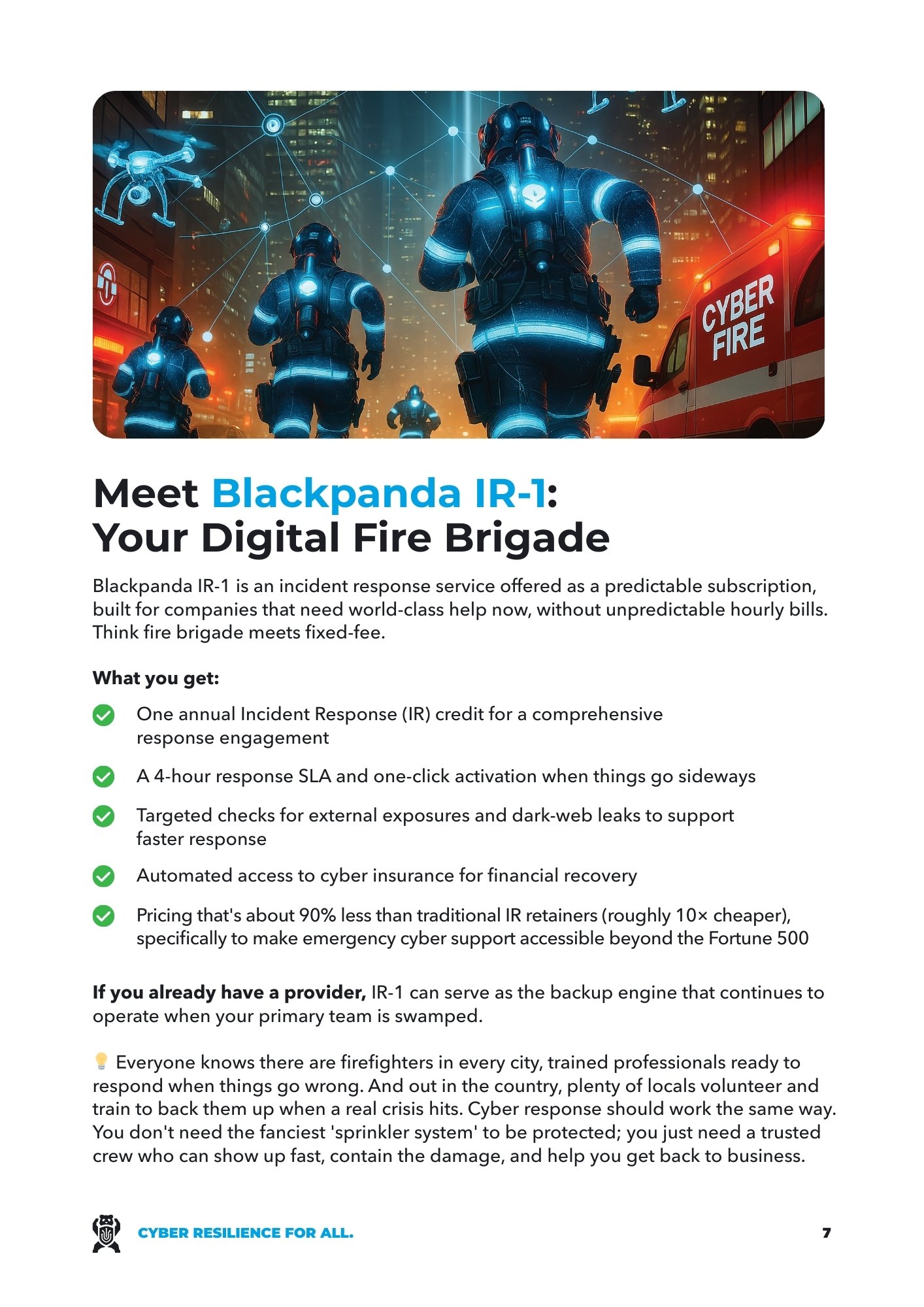
Most APAC SMBs face the same ransomware crews, scams, and supplier attacks as large enterprises—but without the headcount or spare time to build a full in-house response function. This guide reframes incident response as a predictable utility (a “digital fire brigade”) instead of a panicked, last-minute procurement exercise. It explains what that looks like in practice, including rapid activation and a 4-hour response SLA and a subscription-style model that avoids open-ended hourly bills.
Why it matters: in a real incident, speed and coordination often decide whether you lose a weekend… or lose a quarter.
2) A plain-English breakdown of what a cyber incident really costs (and what cyber insurance actually covers)
SMBs often underestimate the “non-IT” costs: legal counsel, regulatory notifications, customer communications, PR, business interruption, and recovery vendors. The guide lays those out clearly—then connects the dots to modern cyber insurance, including the categories it typically covers (legal/notification, forensics/extortion support, restoration, business interruption, PR/reputation, etc.).
Why it matters: even when IT gets systems back, the business can still take a serious hit—financially and reputationally.
3) A pragmatic 12‑month roadmap built for APAC realities (frameworks + data sovereignty)
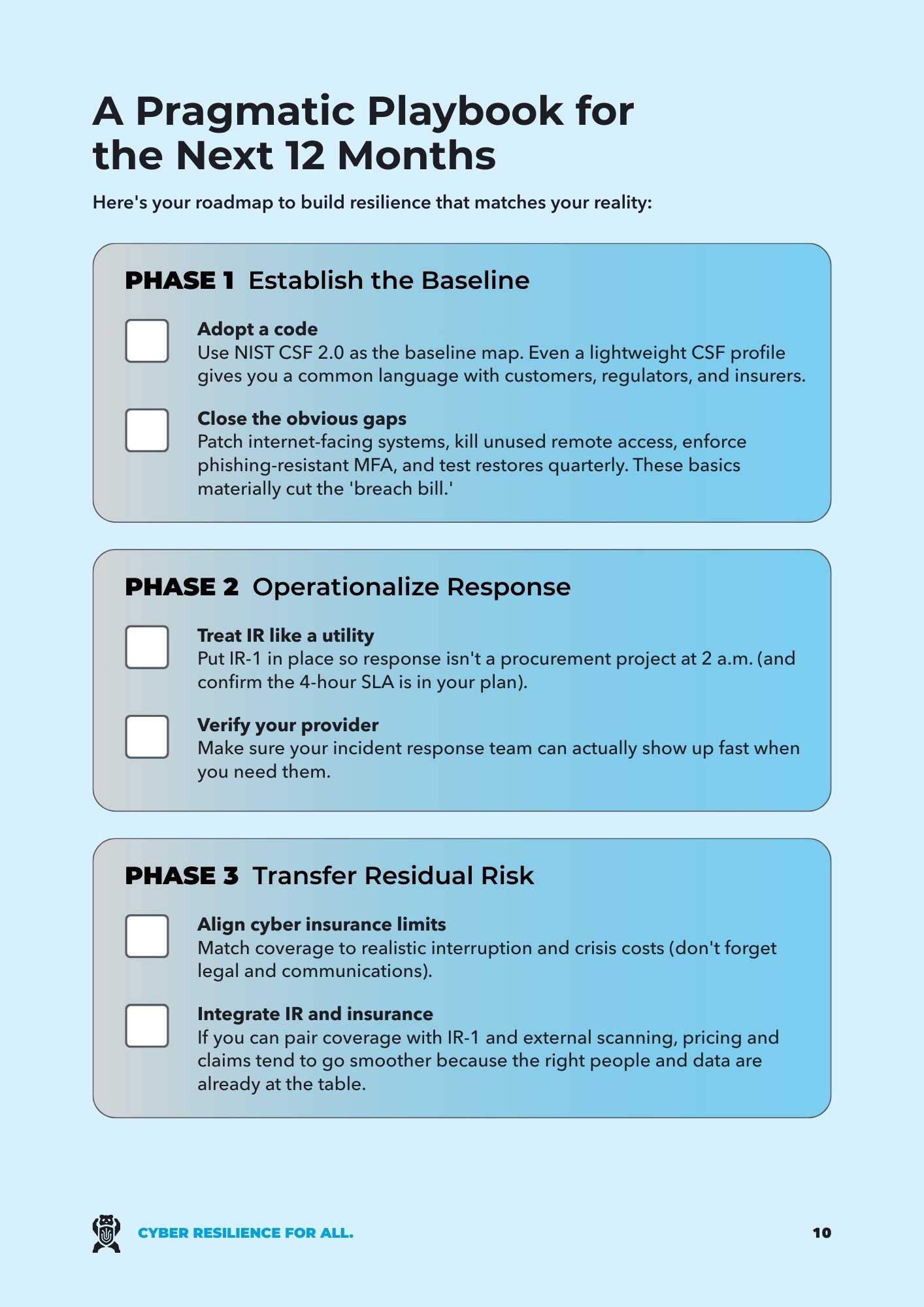
Instead of vague “best practices,” the guide gives a 12-month playbook with phases (baseline → operational response → transfer residual risk) and a practical anchor in NIST CSF 2.0. It also highlights regional data sovereignty/regulatory pressure and cross-border accountability trends (including references to Singapore, Japan, and India’s evolving requirements), which directly affect response planning, breach notification, and where data—and responders—can operate.
Why it matters: resilience plans that ignore local requirements tend to fall apart under real pressure.
WHO IT'S FOR
Built for teams that don’t have time for theory
If you’re running lean — and still need to be ready — this is for you.
Roles
Owners & Managing Directors • CIO/IT Managers • Ops Leaders • CFO/Finance • Compliance & Risk
Common environments
Manufacturing • Logistics • Healthcare/Clinics • Retail • Professional Services • SaaS / Tech
WHAT YOU'LL LEARN
Included inside the guide:
-
The “digital fire brigade” approach: incident response as a predictable utility, not an emergency purchase
-
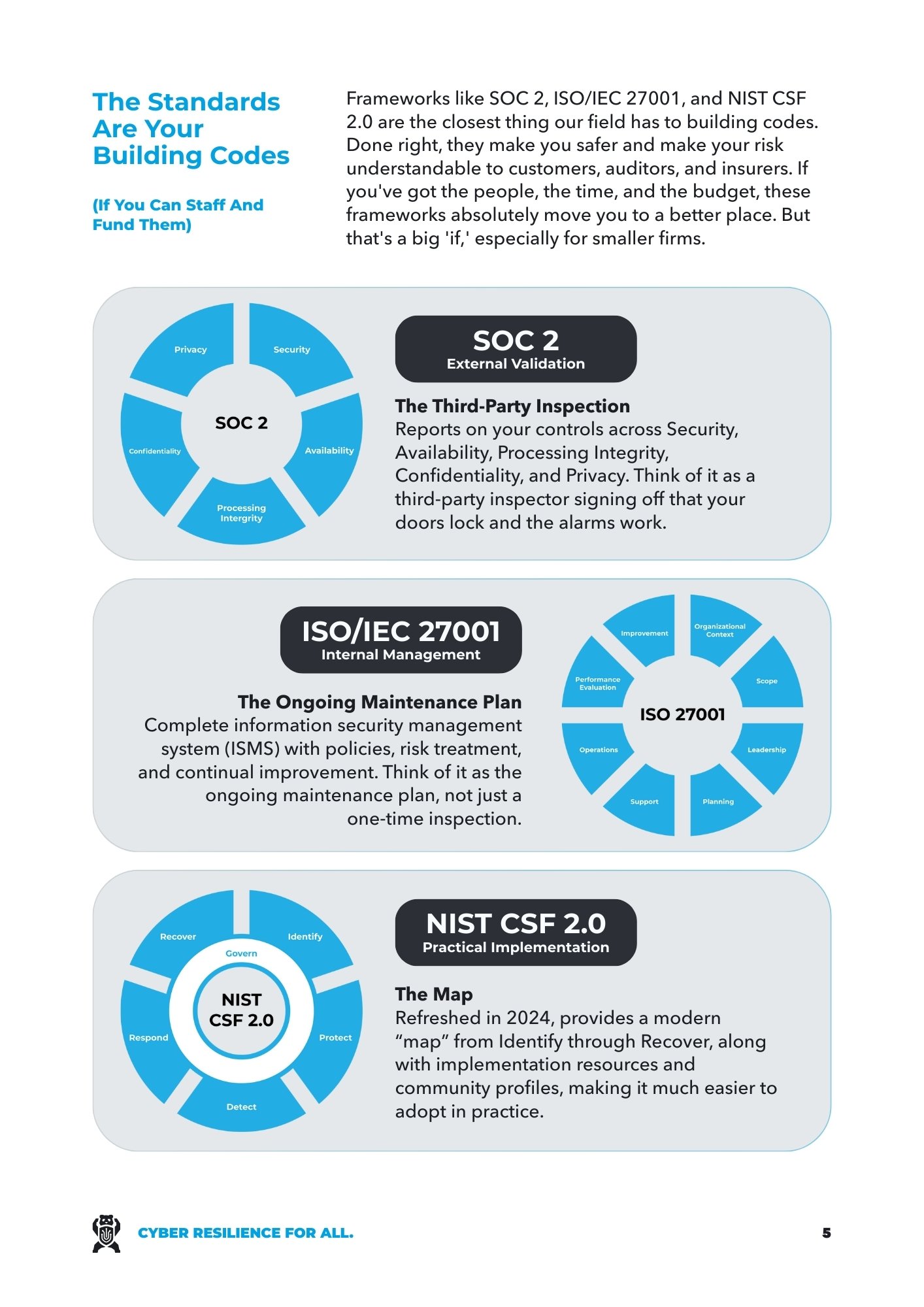
How frameworks like SOC 2, ISO/IEC 27001, and NIST CSF 2.0 map to practical action (and where SMBs get stuck)
-
A clear view of data sovereignty and cross-border accountability pressures in APAC
-
What “non‑IT” breach costs look like (legal, notification, PR, downtime) — and how cyber insurance helps
-
A 12‑month roadmap to establish your baseline, operationalise response, and transfer residual risk
WHY THIS GUIDE EXISTS
Most SMBs are expected to defend like enterprises—without the people or budget.
Threat actors don’t check your org chart before they strike. Across Asia-Pacific, small and mid-size businesses face the same criminal groups and rising regulatory pressure as large companies—just with fewer hands on deck and less room for downtime.
This guide is built to help you close that gap with a plan that fits how SMBs actually operate.
FREQUENTLY ASKED QUESTIONS
Is the guide really free?
Yes. Just complete the form to receive the link to view and download the PDF.
Will this be too technical?
No. It’s written for business and IT leaders who need a practical plan, not a textbook.
Does it cover APAC requirements?
Yes. It discusses regional data sovereignty and regulatory direction, and why it matters for response and recovery.
What happens after I download?
We’ll send the PDF link. If you opt in, you may also receive practical resilience updates. No spam.